The U.S. Ivory Crush in Times Square


U.S Fish &Wildlife's #IVORYCRUSH in NYC

U.S Fish &Wildlife’s #IVORYCRUSH in NYC

On June 19, 2015, in Times Square, New York City, the U.S. Fish and Wildlife Service, with wildlife and conservation partners, will host its second ivory crush event. One ton of ivory we seized during an undercover operation, plus other ivory from the New York State Department of Environmental Conservation and the Association of Zoos and Aquariums, will be crushed in front of VIPs and the general public.

What can you do to help?

The United States is among the world’s largest consumers of wildlife products – both legal and illegal. We have a significant ivory market, and we must continue to be vigilant in combating illegal ivory trade. You can help by not buying items that contain elephant ivory and by spreading this message to your family and friends. The work of law enforcement is an important part of the overall effort to stop wildlife poaching, but the only way to truly stop this slaughter is by ending consumer demand for ivory.

Via U.S. Fish & Wildlife


The Battle Against Ivory Trafficking Continues in The Midwest

Ivory Seizure in Ohio. Photo Credit; FWS

Ivory Seizure in Ohio. Photo Credit; FWS

Thanks to some scrutiny of online auction sites and on the ground package inspections, an ivory trafficker and self-proclaimed 20-year antiques dealer from Ohio has been put out of business. Together, our federal wildlife inspectors and special agents connected the dots to stop a long-running operation that channeled illegal ivory sales through an online auction and shopping website.

Even though African elephants have been protected internationally for decades, more than 30,000 elephants are poached annually for the illegal ivory trade. In 25 years of enforcement, the U.S. Fish and Wildlife Service has seized more than six tons of illegal ivory. That tonnage is built upon cases, large and small over the years. This latest case stems from a two-year investigation that began when Chicago-based wildlife inspectors discovered a series of illegal shipments destined for China, all mislabeled and without the required permits.

Continue reading

What does this Number mean?

LARGE_WhatDoesMean_PastedGraphic-1

By; Rob Monroe

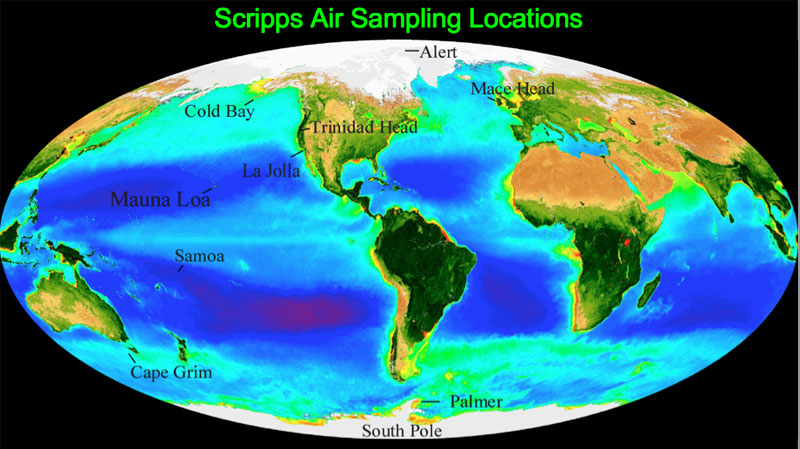
The Mauna Loa carbon dioxide (CO2) record, also known as the “Keeling Curve,” is the world’s longest unbroken record of atmospheric carbon dioxide concentrations. This record, from the NOAA-operated Mauna Loa Observatory, near the top of Mauna Loa on the big island of Hawaii, shows that carbon dioxide has been increasing steadily from values around 317 parts per million (ppm) when Charles D. Keeling began measurements in 1958, to nearly 400 ppm today.

Scientists make CO2 measurements in remote locations to obtain air that is representative of a large volume of Earth’s atmosphere and relatively free from local influences that could skew readings. The quality of data is verified before daily average values are determined.

Continue reading

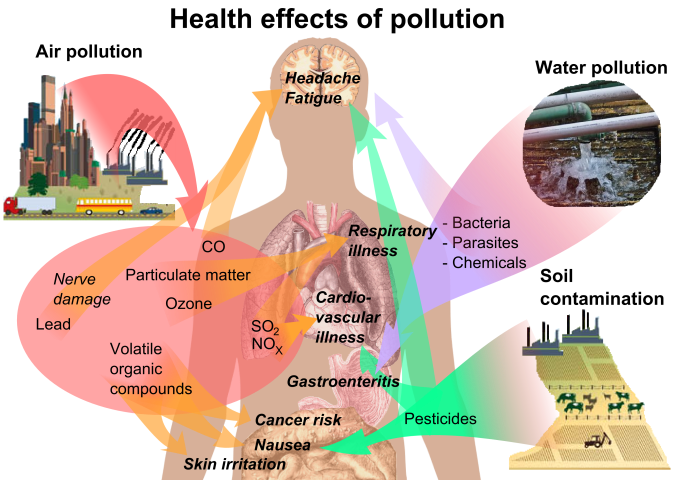
Effects of Pollution on Humans and Wildlife

Health_effects_of_pollution

Body Burden is an accumulation of chemical toxins in our body. In 2005, an average of 200 chemicals were found in the cord blood on newborns. “Our babies are being born pre-polluted”, says Sharyle Patton, co-sponsor of “Is It in Us?”

According to the UN World Water Assessment Programme, about 2.3 billion people suffer from diseases associated with polluted water, and more than 5 million people die from these illnesses each year. Dysentery, typhoid, cholera, and hepatitis A are some of the ailments that result from ingesting water contaminated with harmful microbes. Other illnesses—such as malaria, filariasis, yellow fever, and sleeping sickness—are transmitted by vector organisms (such as mosquitoes and tsetse flies) that breed in or live near stagnant, unclean water. Continue reading

Food and Agriculture

Livestock made to stand in manure and urine all the days of its life until the day it dies.  This is a Controlled Animal Farming Operation.

Concentrated Animal Feeding Operation (CAFO). Unlike free range livestock, food is brought to these animals while they wait in manure and urine. Photo Credit: Save Our Rain

Increase in Food production and its Impact on the Environment and Food Safety: 

In the United States, we are fortunate to have an abundant supply of food. However, this abundance is largely due to the advances in agricultural technology, which have in turn created numerous concerns surrounding our food sources.  The first example of an increase of food production within the United States is the  Concentrated  Animal Feeding Operations (CAFO) also known as Animal Feeding Operations (AFO) (EPA, 2015)  where animals such as swine, chickens, and cows, are confined in small quarters for a short amount of time before being slaughtered for consumption. While the time it takes for the animal to grow to capacity has decreased due to hormone injections and the genetically modified organisms that are fed to them, the impact of CAFO’s across the U.S. on our environment is substantial.

Continue reading